|
HOME
About US Available
Retired AKK Our Males
Our Females
The Legend
Breed History
Breed Standards
Breeding for
Color
Red AKK
Documents
Contact Us
Questionnaire
Whelping Calendar
| |
Frequently Asked Questions
How did they get them so small?
When the breed was just beginning, a Schipperke and an American Eskimo were used
to bring the size of the Alaskan Husky down.
Can you get a Alaskan Klee Kai with blue eyes?
Yes, Alaskan Klee Kai can have one or both blue eyes. They may also have an eye
that is only part blue and the other part brown. This is called a "parti eye".
There is nothing wrong with the eye: the dog can see perfectly clearly. This is
a common trait in the Siberian Husky, the Alaskan Klee Kai and some other Blue
eyed dog breeds.
What Coat Colors do they come in
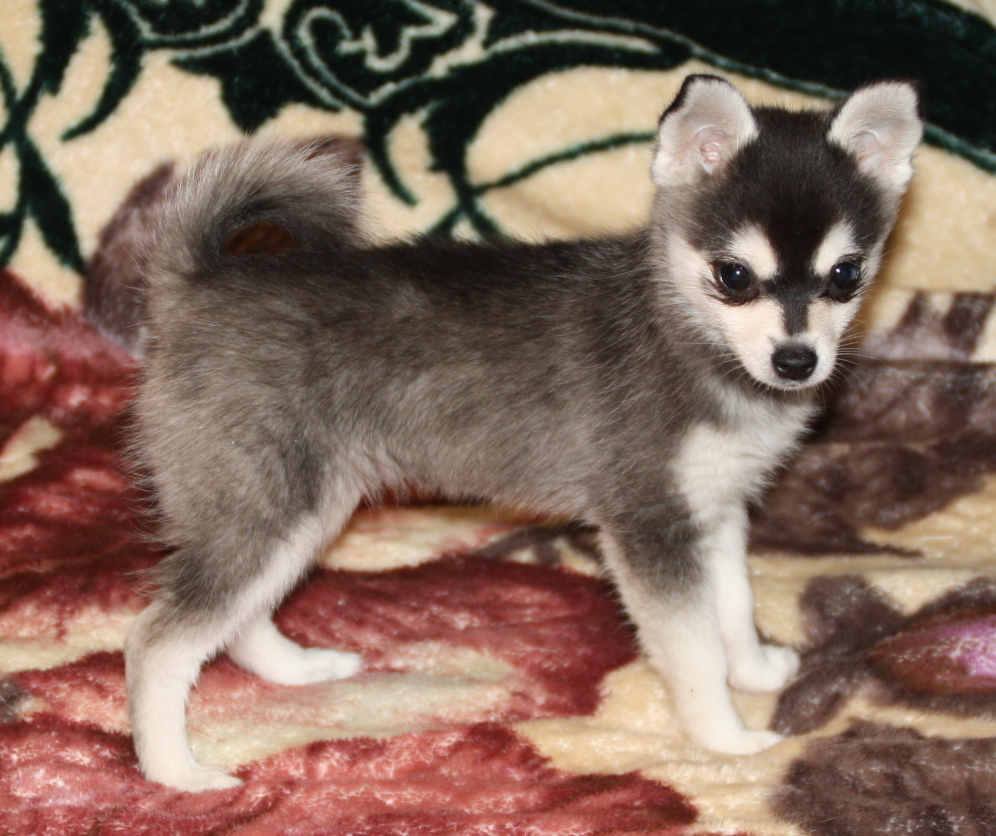
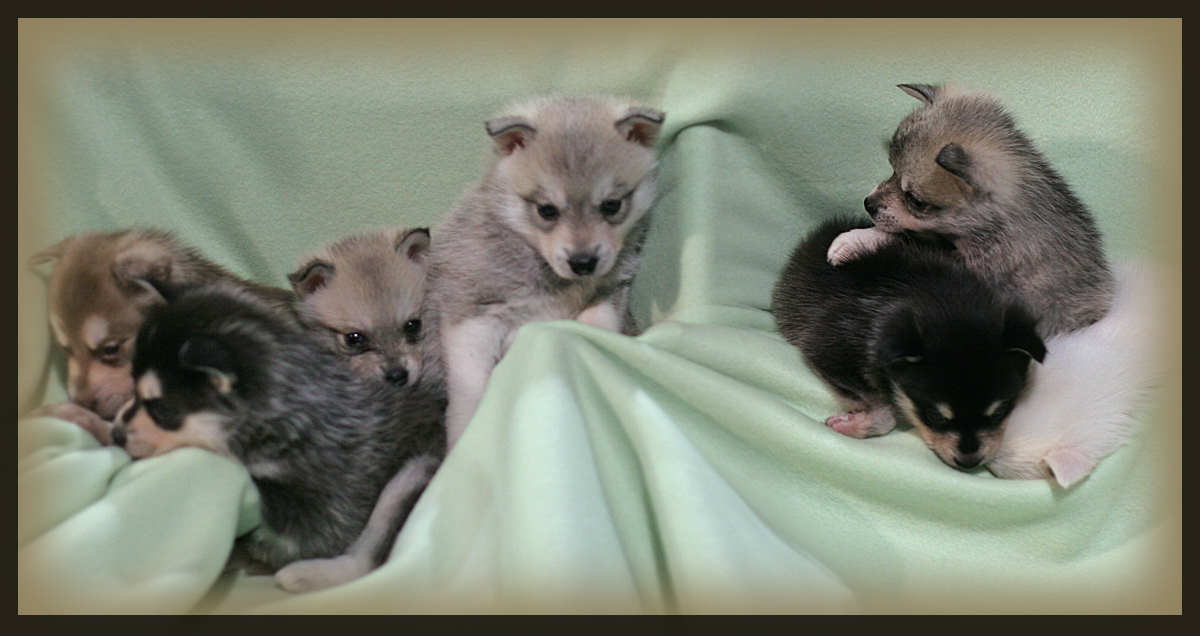
Alaskan Klee Kai come in Black and White, Gray and White and Red and White.
There are sometimes also solid white puppies born but they are not allowed per
breed standards and are not registerable or showable in comformation shows.
How do Alaskan Klee Kai do in different temperatures?
Please read this page
How are they with kids?
Alaskan Klee Kai love kids and do great with them as long as the child has been
taught to respect the dog and not tease it. These dogs are small enough that an
out of control child could cause serious damage. Most Alaskan Klee Kai would
give a child enough leeway that the child could cause serious damage before the
dog could run. Good owners make good dogs. They do seem to have this sixth sense
about the intentions of a child and will usually avoid a child with bad
intentions.
Is a yard big enough for a Alaskan Klee Kai?
Yes, even though they require a lot of exercise, they will accomplish this in a
nice sized yard. If there is more than one dog, they will play chase. If not,
they will chase birds, shadows, grasshoppers, snakes, or anything else that
looks like it should be chased. They can also be kept in an apartment, they were
bred to be apartment sized huskies.
Do they shed a lot?
Yes, they shed twice a year. They blow their coat each time and require plenty
of brushing during this period. Of course when you are looking at a 10 to 20
pound dog, there isn't nearly as much hair as regular sized husky.
How are they with other dogs?
My Alaskan Klee Kai have had no problems adapting to other Alaskan Klee Kai as
well as Other breeds to include both larger and smaller dogs.
How miniature are they?
The average Alaskan Klee Kai is between 10 and 20 pounds, and 12 and 15 inches.
Who should not own a Alaskan Klee Kai?
Anyone who can't stand hair should not have a Alaskan Klee Kai. Anyone who
can't be consistent should not own a Alaskan Klee Kai. Anyone who does not like
to draw attention to themselves because everyone who sees a Alaskan Klee Kai
wants to know what it is, where they can get one and how much they cost.
Is this breed recognized by the AKC?
We are currently working for AKC recognition. The Alaskan Klee Kai are
currently recognized by UKC and ARBA.
General Health
These dogs have been remarkably free of genetic defects. We only allow serious
breeders to buy un-neutered dogs. All puppies are sold on spay/neuter contracts,
co-ownerships or to approved serious breeders. I believe that this is the reason
for the lack of flaws. We have had an occasional undershot jaw, cryptorchidism
and in the past there have been dogs that had to have baby teeth pulled that
didn't come out.
Sometimes shyness can be a problem.
Careful attention must be paid to the patella. It is very easy to develop
luxating patellas in the smaller dogs, therefore, extra care must be given to
the possible tendencies in our breeding stock. You should check that any pup you
are considering has had its parents screened for luxating patellas by a
veterinarian.
However, most breeders are very careful, and for this reason, Alaskan Klee Kai
is remarkably problem free medically speaking. If a breeder tells you
otherwise, please check with their other lines or with other breeders. As time
goes on, we are hearing of more disorders occuring as the numbers of breeders
and even the numbers of dogs appearing to be growing exponentially.
* Cryptorchid/Monorchid * Patella Luxation * Heart Murmur-Innocent and Genetic *
Elevated ALT * Juvenile Cellulitis (Puppy Strangles) * Portosystemic Shunt
(Liver Shunt) * Juvenile Cataracts * Cleft Palettes * Factor VII (only one
symptomatic but several in the affected category.)
| |
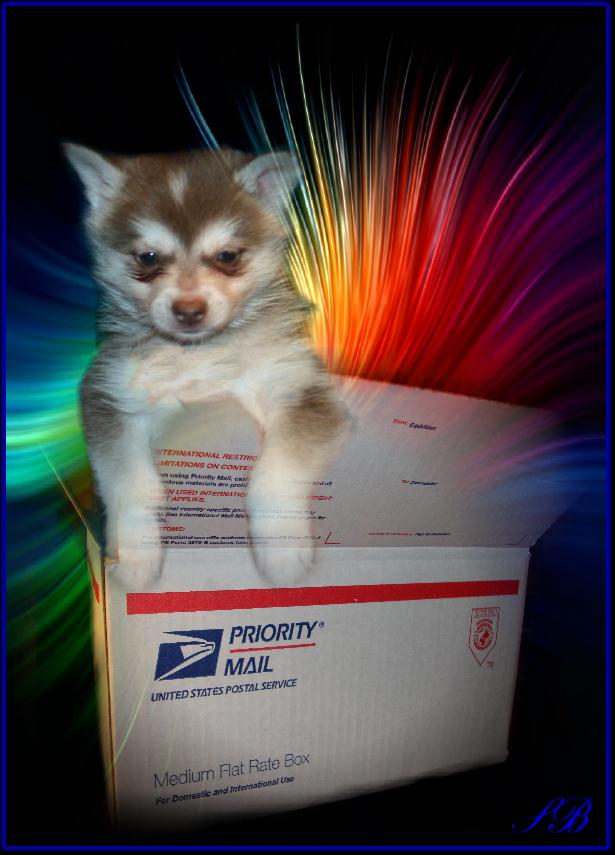
We do transport puppies but not by postal service.
place holder
|